Protests took place in Tel Aviv, Jerusalem, Haifa, and Beersheba, as a survey found broad but uneven support among Jewish Israelis for Operation Roaring Lion.
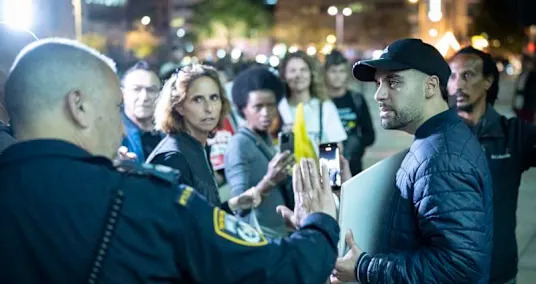
Israel Police arrested 21 anti-war protesters Saturday night as demonstrations against the conflict with Iran expanded in multiple cities despite restrictions on public gatherings.
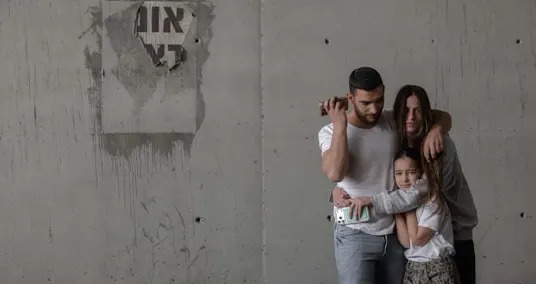
Protests took place in Tel Aviv, Jerusalem, Haifa, and Beersheba, with hundreds of participants reported in Tel Aviv and Jerusalem and about 100 in Haifa, marking the largest turnout since weekly demonstrations began. Authorities said 13 people were arrested in Tel Aviv and eight in Haifa.
Police said the gatherings were not approved under Home Front Command regulations that ban events with more than 50 people. Officials said the increase in turnout followed calls by groups opposing the government to protest despite the restrictions.
“During a situation assessment that took place at the scene with a Home Front Command representative… it was clarified that there was a real risk to human life and accordingly, Yarkon [precinct] police commander Tzachi Sharabi ordered the gathering to be dispersed,” police said.
Hadash-Ta’al chairman Ayman Odeh, an Arab lawmaker involved in the protests, criticized the police response, calling officers fascists “in the service of the government” and saying they were afraid of “the heroic citizens who went out, despite everything, to make their voice heard.”

Survey shows broad, uneven support for war
The demonstrations come as a March 2026 survey by the Israel Democracy Institute found broad but uneven support among Jewish Israelis for Operation Roaring Lion. Support was strongest on the Right at 87% and about half on the Left.
The survey also found that Jewish and Arab respondents largely agreed that Iran’s resilience has been stronger than expected. Most Jewish respondents said Israeli society could sustain the campaign for up to one month, while 28% said as long as needed. Arab respondents were less optimistic about how long the public could endure the conflict.
A majority of Jewish respondents said Prime Minister Benjamin Netanyahu’s decision was driven by security considerations, while most Arab respondents viewed it as political.
LATEST POSTS
- 1
 A rare whale is having an encouraging season for births. Scientists warn it might still go extinct
 - 2At least 171 measles cases confirmed in 9 states, CDC data shows
- 3Haifa refinery said hit in latest Iranian missile barrage
- 4'Not the moon that I'm used to seeing': Artemis II astronauts describe seeing the far side
- 5The most effective method to Pick the Ideal Lab Precious stone Wedding band




- Getting breast implants was a mistake I live with every day. Why I’m sharing my story now, at 70, in pain and afraid.
- New studies of old dogs help scientists understand where they came from
- Under pressure at home, Belgium's leader treads a tight rope with EU partners over funds for Ukraine
- Airport wait times won't return to normal until Congress reaches a deal to pay TSA. Here's why they still can't come to an agreement.
- Scientists captured female sperm whales on video working together during a birth to protect the calf
- Passover under fire: Israelis balance fatigue with cautious hope after month of war
- NASA counts down for first crewed lunar mission in half a century
- Aid sent by ambulance to Ukraine front line
- COGAT discovers motor oil hidden inside UN's humanitarian aid to Gaza in smuggling attempt